
Optical components in dental microscopes play an important role in improving image quality, magnification, and observation accuracy during dental procedures. Dental microscopes, also known as oral microscopes or endodontic microscopes, are widely used in root canal treatment, apical surgery, clinical diagnosis, dental restoration, and periodontal procedures.
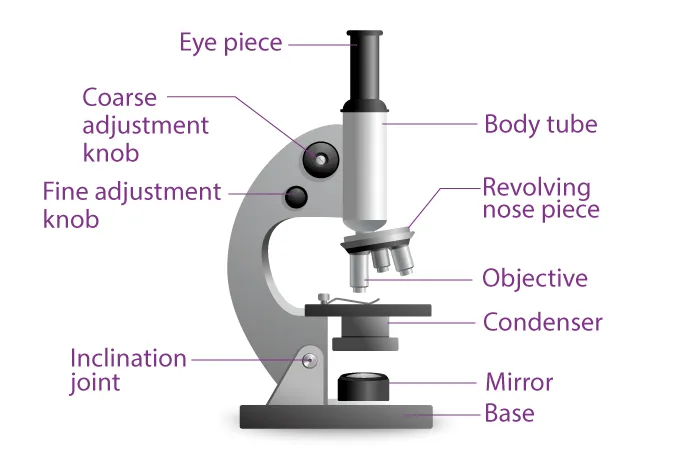
A dental surgical microscope typically consists of a holder system, optical magnification system, illumination system, camera system, and accessories. Within the optical magnification system, precision components such as objective lenses, prisms, eyepieces, and spotting scopes work together to provide clear and stable images for dental professionals.
The objective lens is one of the most important optical components in a dental microscope. It is responsible for forming the initial image of the object under examination and has a significant influence on image quality and optical performance.
The objective lens affects important optical parameters such as magnification, resolution, working distance, and chromatic aberration. Traditional objective lenses can be classified according to their degree of chromatic aberration correction, including achromatic, complex achromatic, and semi-apochromatic objective lenses.
For dental applications, the optical performance of the objective lens is particularly important because dentists need clear images of small anatomical structures during procedures such as endodontic treatment and microsurgery.
Prisms are used to redirect and fold the optical path inside dental microscopes, allowing the optical system to achieve a compact and practical configuration. Precision prisms can help maintain accurate optical alignment while directing light between different optical components.
The surface quality, angular accuracy, transmission characteristics, and coating performance of prisms can influence the overall imaging performance of the microscope. High-precision optical prisms are therefore important for maintaining image quality and system stability.
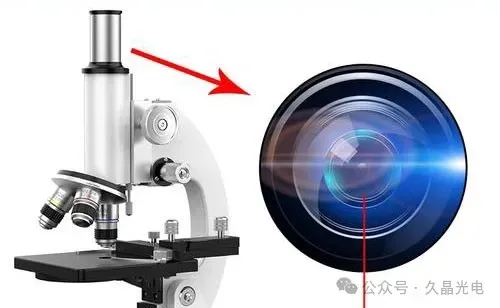
The eyepiece magnifies the real image produced by the objective lens and provides the final image for observation by the user. It works together with the objective lens to determine the overall magnification of the optical system.
Optical performance, field of view, and image clarity are important considerations when designing eyepieces for dental microscopes. A well-designed eyepiece helps dentists observe fine details more comfortably and accurately during clinical procedures.
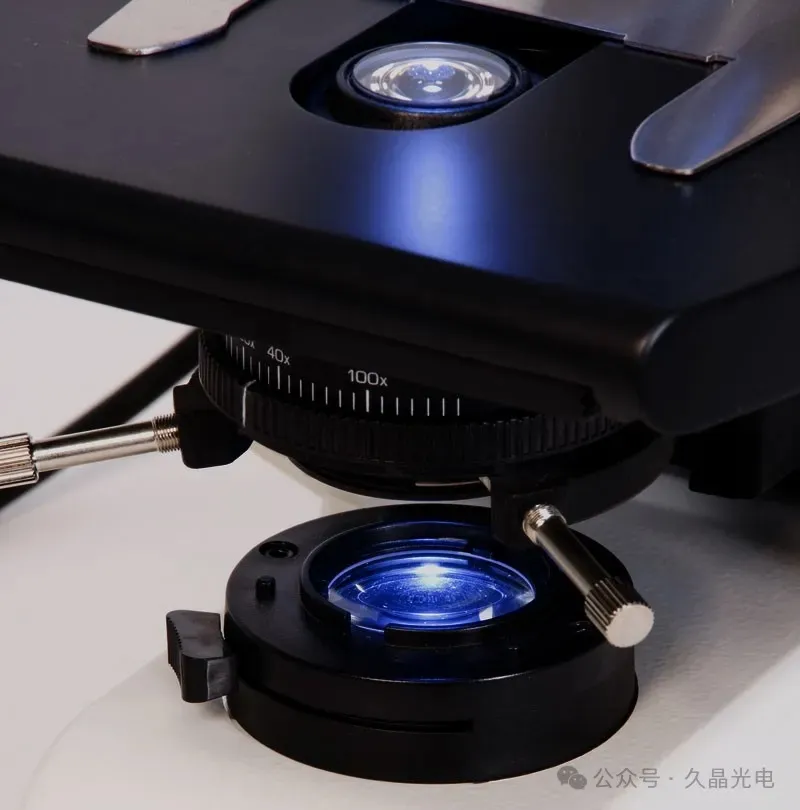
The spotting scope, also known as a condenser, is typically mounted beneath the stage and helps control and concentrate illumination in optical systems using objective lenses with a numerical aperture of 0.40 or greater.
Spotting scopes can include Abbe condensers, achromatic condensers, and swing-out condenser designs. Special-purpose condensers, including dark-field, phase-contrast, polarizing, and differential-interference condensers, can also be used for specific observation requirements.
The appropriate condenser design helps provide effective illumination and contributes to clear observation of the area being examined.
The performance of a dental microscope depends on the coordinated performance of its optical components. Objective lenses determine the initial image quality, prisms control the optical path, eyepieces provide magnified observation, and condensers support effective illumination.
By combining high-quality optical components with accurate mechanical alignment and illumination systems, dental microscopes can provide clear and stable images for demanding clinical applications.
For this reason, the design and manufacturing quality of optical components are important factors in the overall performance of dental microscopes.
High-precision optical components are essential for the imaging performance of modern dental microscopes. Objective lenses, prisms, eyepieces, and spotting scopes each perform a specific function within the optical system.
Jiujon Optics provides precision optical components for medical and scientific instruments, with capabilities in optical lenses, prisms, filters, mirrors, and optical assemblies.